
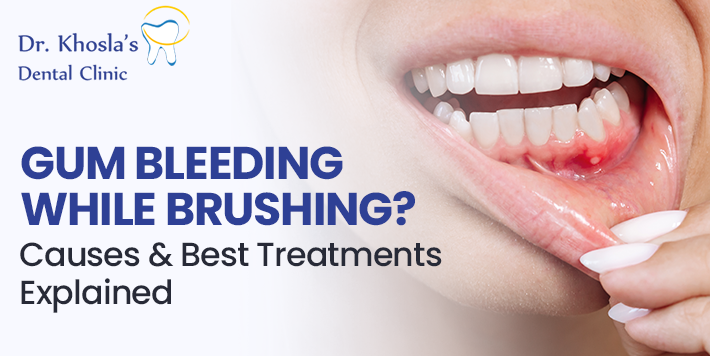
It’s a sight many of us have become far too accustomed to: a faint pink tinge in the sink after brushing or a streak of red when flossing.
While commonly dismissed as a minor annoyance or the result of “brushing too hard”, gum bleeding is, in fact, one of the most significant and urgent warning signs your body can give you. It is your oral system flashing a definitive red flag that you are most likely ignoring.
Far from being a simple cosmetic issue, persistent gum bleeding is the primary symptom of gum disease, and this guide will take a look into the causes and best treatments available.
What’s Happening Beneath the Surface? Why Do Gums Bleed?
The simplest explanation for why your gums are bleeding is simple: It is due to the tissue being inflamed or infected.
In some cases, the bleeding becomes persistent, while in other cases, it happens occasionally. While most cases of gum bleeding start with plaque buildup, there are a lot of other causes lurking beneath the surface.
These include:
1. Plaque and tartar buildup
Let us start with the most common culprit: plaque and tartar.
Plaque is a soft, sticky film made of bacteria that forms on your teeth throughout the day. If you aren’t maintaining proper oral hygiene, this plaque hardens into tartar, which sticks to the gumline, triggering inflammation.
This particular inflammatory response is called gingivitis, which is the earlier stage of gum disease. At this stage, if treated on time, the issue can be reversed.
While plaque can be removed at home with proper brushing, flossing, etc., tartar requires professional cleaning.
2. Improper brushing techniques
You must be thinking, “There’s a certain way to brush our teeth?” Well, yes.
One of the most common beliefs people have is “brushing harder” means better cleaning. In reality, aggressive brushing does more harm than good because it damages the gum tissues and the enamel too.
Some of the common brushing mistakes you need to avoid are:
- Using a hard-bristled toothbrush
- Applying excessive pressure while brushing
- Brushing with improper angles
- Rushing the process
Healthy brushing should feel gentle, controlled, and systematic, and if you are noticing gum bleeding, switch to a soft-bristled toothbrush to prevent worsening the damage.
3. Vitamin C and K deficiency
Much like the rest of your body, even your gums rely on good and balanced nutrition to stay firm and resilient.
Two of the key vitamins that play a crucial role in gum and oral health are vitamins C and K. So, if you are deficient in those, chances are that they could be contributing to your bleeding gums. For example:
- When you have a vitamin C deficiency, it weakens the connective tissues, making gums more prone to irritation and bleeding.
- When you have a vitamin K deficiency, it impacts how your blood clots, causing prolonged or frequent bleeding in the gum tissue.
Hence, if you are noticing frequent bleeding from the gums, get your vitamin levels tested to confirm whether or not you are deficient. If yes, then supplementation as per the doctor’s prescription is the best treatment.
4. Hormonal changes
Surprisingly, hormones have a direct correlation with gum sensitivity. This explains why a lot of individuals tend to experience gum bleeding during pregnancy, menstruation, and menopause.
While hormonal changes don’t directly cause gum disease, they amplify your gums’ response to plaque. This makes consistent professional cleanings even more important during these phases. We often recommend our patients to thus schedule a consultation for further evaluation.
5. Certain medications that affect oral tissues
There are certain medications that directly impact saliva flow and alter gum tissue. They also cause blood thinning. All of these combined can make your gums more reactive and prone to bleeding.
Some of the most common medications that could be causing your gum bleeding are:
- Blood thinners like aspirin or warfarin
- Anti-seizure medications
- Immunosuppressants
- Chemotherapy drugs
- Certain antihypertensives
If you are on long-term medication and notice changes in your gums, we urge you to share that with our dentists during your consultation.
6. Smoking or tobacco use
Ill habits like smoking and tobacco not only affect major organs in the body but also have equally destructive impacts on your oral health.
- For example, tobacco reduces blood flow to the gums, slows healing, weakens your immune response, and increases bacterial growth.
- Smoking, on the other hand, causes gum disease to develop and progress faster.
So, if you are an active smoker or use tobacco regularly, consider scheduling a consultation with our dentists at Dr Khosla’s Dental Clinic.
7. Systemic health conditions
A lot of the times, gum bleeding could point towards a much more deeply seated trouble inside your body.
Several chronic conditions like diabetes, blood disorders, and autoimmune diseases affect gum health and make the tissues more fragile, which could be causing your gums to bleed while you are brushing them.
So, if you notice that gum bleeding is accompanied by additional symptoms like fatigue, bruising, or persistent infections, it is a sign that you need to first consult a dentist and then your primary care physician to manage the symptoms better.
What is the Best Way to Diagnose Gum Disease?
Gum bleeding could be sparse, or it could be happening more frequently. Either way, finding out “why” it is happening is the first step to getting the right treatment.
That’s exactly what our dentists at Dr Khosla’s Dental Clinic prioritise. A thorough diagnosis will include:
- Oral examination to check gum colour, texture, recession, swelling, and pocket depth around the teeth.
- X-rays (if needed) are done to assess bone loss or deeper infection.
- Medical and lifestyle history to understand what medications you are on, the kind of habits you have, etc.
- Oral hygiene evaluation to know more about your brushing technique, toothbrush type, and daily habits.
What are the Best Professional Treatments for Bleeding Gums?
Once the diagnosis is complete and we have a better understanding of why the gum bleeding is happening, the next step is customising the right treatment plan.
The best professional treatments for bleeding gums include:
- Professional dental cleaning or scaling
- Deep cleaning (scaling or root planing)
- Laser gum treatment
- Medication and antimicrobial rinses
- Treatment for hormonal or systemic causes
- Correcting faulty dental work (if that’s irritating the gums and causing bleeding)
At Dr Khosla’s Dental Clinic, our dentists evaluate your symptoms and recommend the most effective treatment plan tailored to your needs.
Take Control of Your Oral Health Today!
The presence of blood in your sink is not a minor irritation; it is a clear, actionable symptom demanding professional dental care. Delaying treatment for bleeding gums means allowing a preventable and treatable infection to progress into irreversible bone loss, risking your teeth and jeopardising your general health.https://www.sportic.esquel.org.ec/
At Dr Khosla’s Dental Clinic in New Delhi, we specialise in advanced periodontal care, from non-surgical deep cleaning to complex regenerative procedures.https://ihip.mohfw.gov.in/npcchh/
If you are experiencing gum bleeding while brushing or flossing, don’t wait for the problem to escalate to tooth loss. Schedule your consultation today!